Engineering
A showcase of the final project for the spring semester of 2026.
Assignment Overview
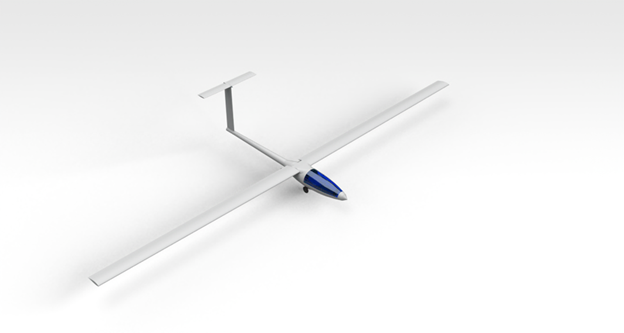
A glider, capable of supporting an 80 kg pilot, was to be designed in NX. The main focus of this project was the glider's range.
Groups of three were created to work on the project. In my group, I focused on the initial parameters, wing design, and wheel design. Other parts were created by my teammates.
Preliminary design values
Initial design parameters — wingspan, fuselage dimensions, tail areas, and gross weight — were estimated from data on already existing gliders, then refined through iteration as the design progressed.
The main reference for this glider was the DG Flugzeugbau DG-800.
Wing Design
Firstly, an airfoil needed to be selected for the wing design. For this, I made a custom web-scraping application that gathered all the symmetric 4-, 5-, and 6-digit airfoil data from airfoiltools.com.
Then, all the airfoils were analyzed with a custom MATLAB script to evaluate their performance. The airfoil with the best cl/cd, subject to a minimum stall angle, was chosen.
The airfoil that was selected was the NACA 63 for the main wings and EPPLER E836 HYDROFOIL AIRFOIL for the tail surfaces (due to its lowest cd).
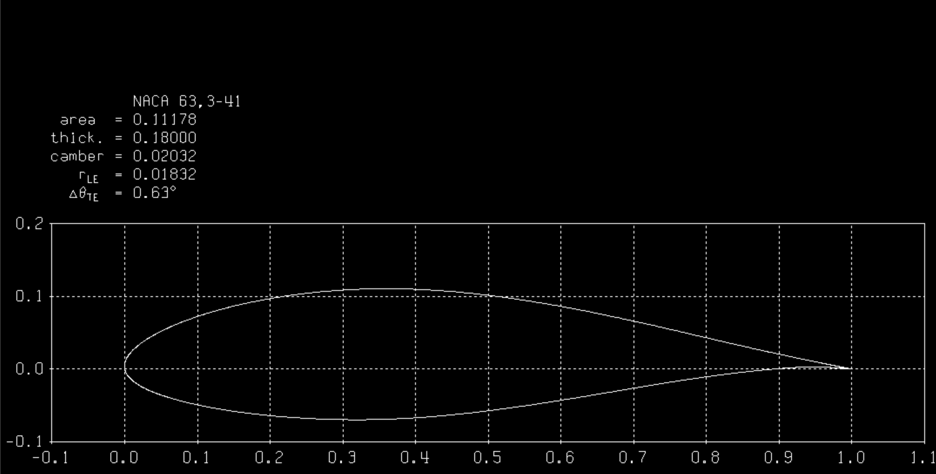
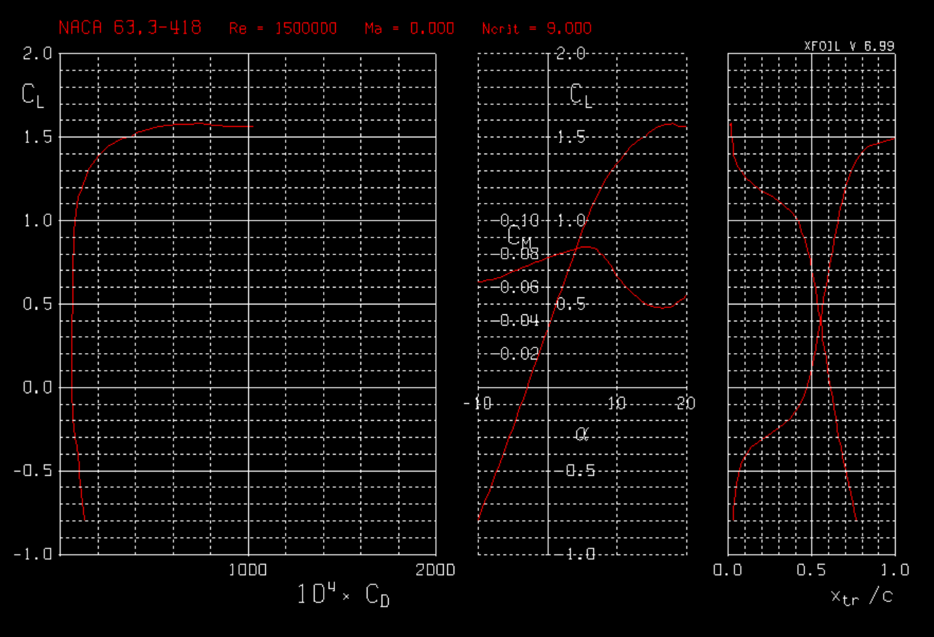
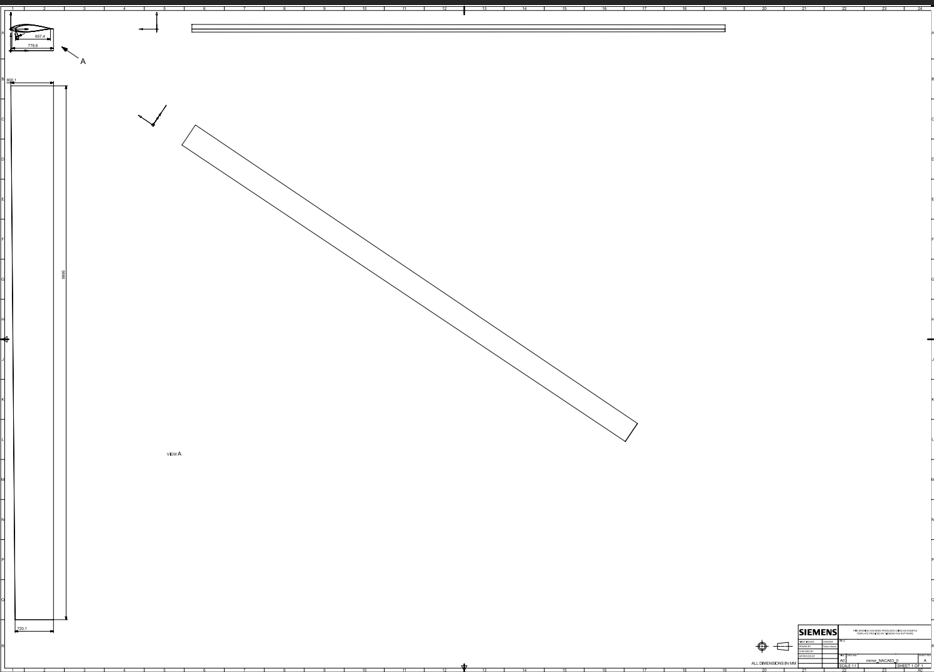
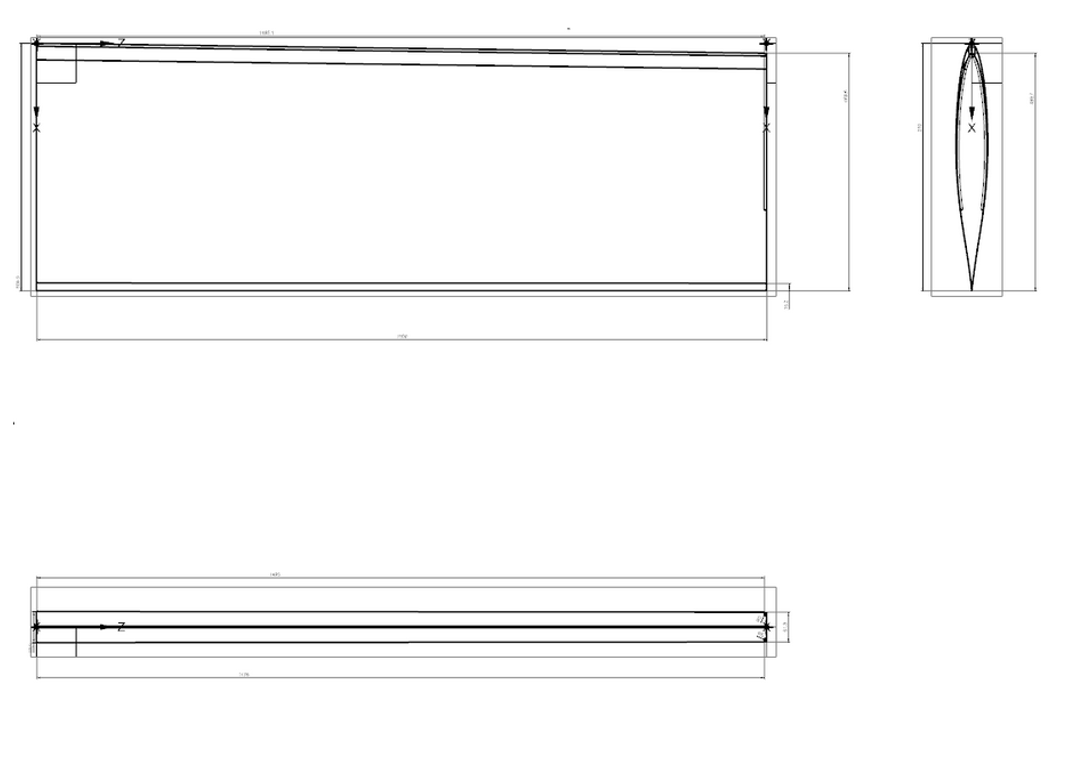
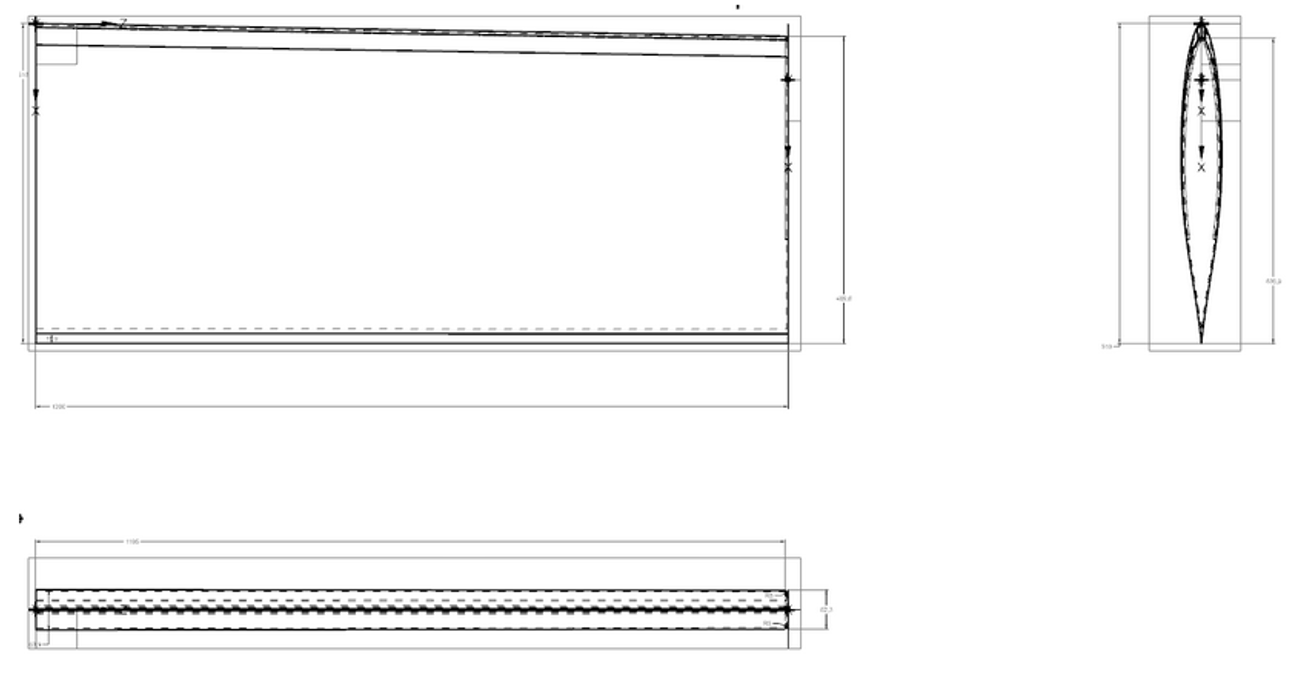
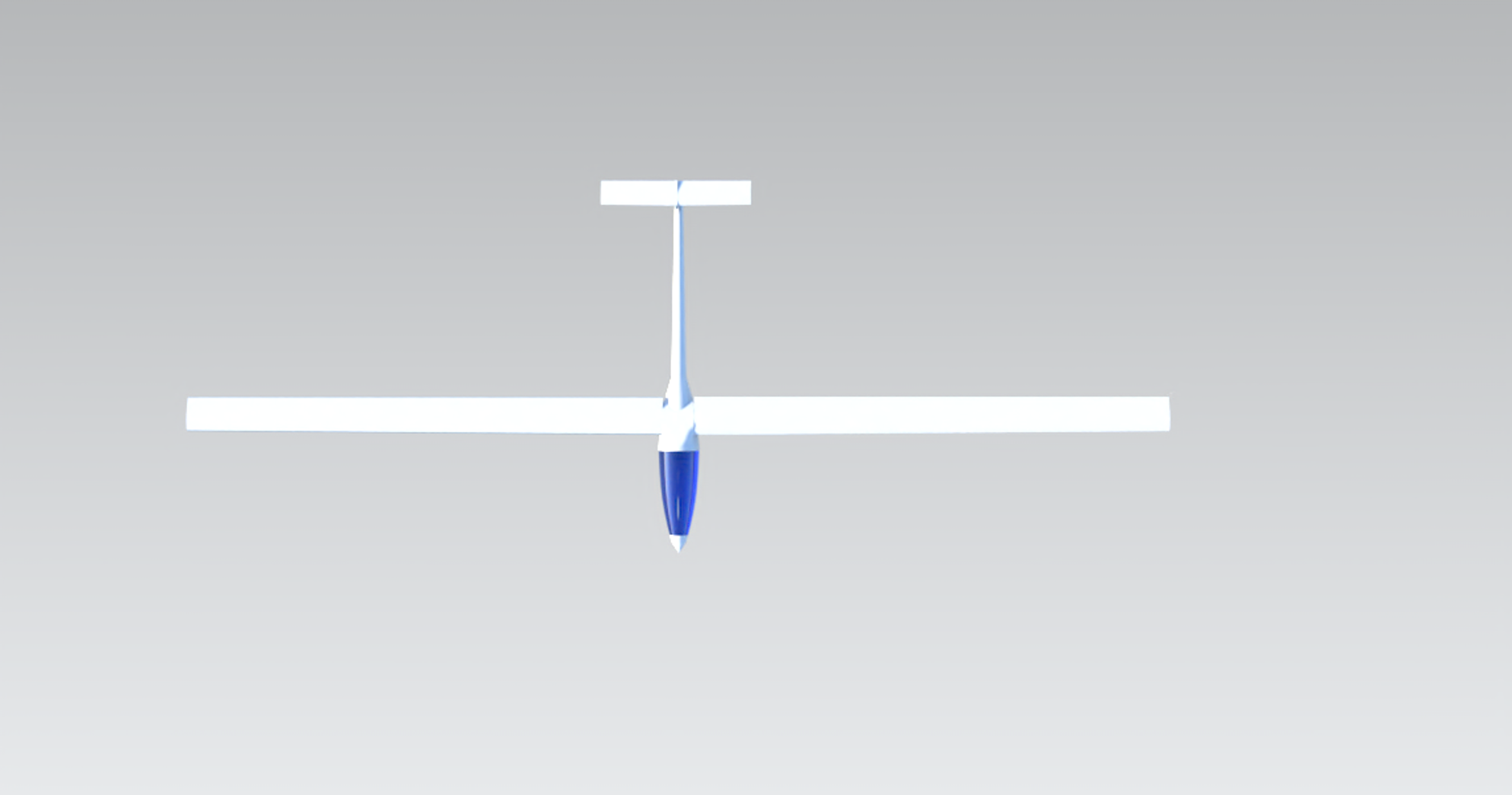
The main wing was then designed based on the selected airfoil. A wingspan of 20 m was chosen based on the estimated weight and target flight speed, allowing for comfortably low stall speeds.
A sweep angle of 0 degrees was chosen for ease of manufacturing and low-speed performance.
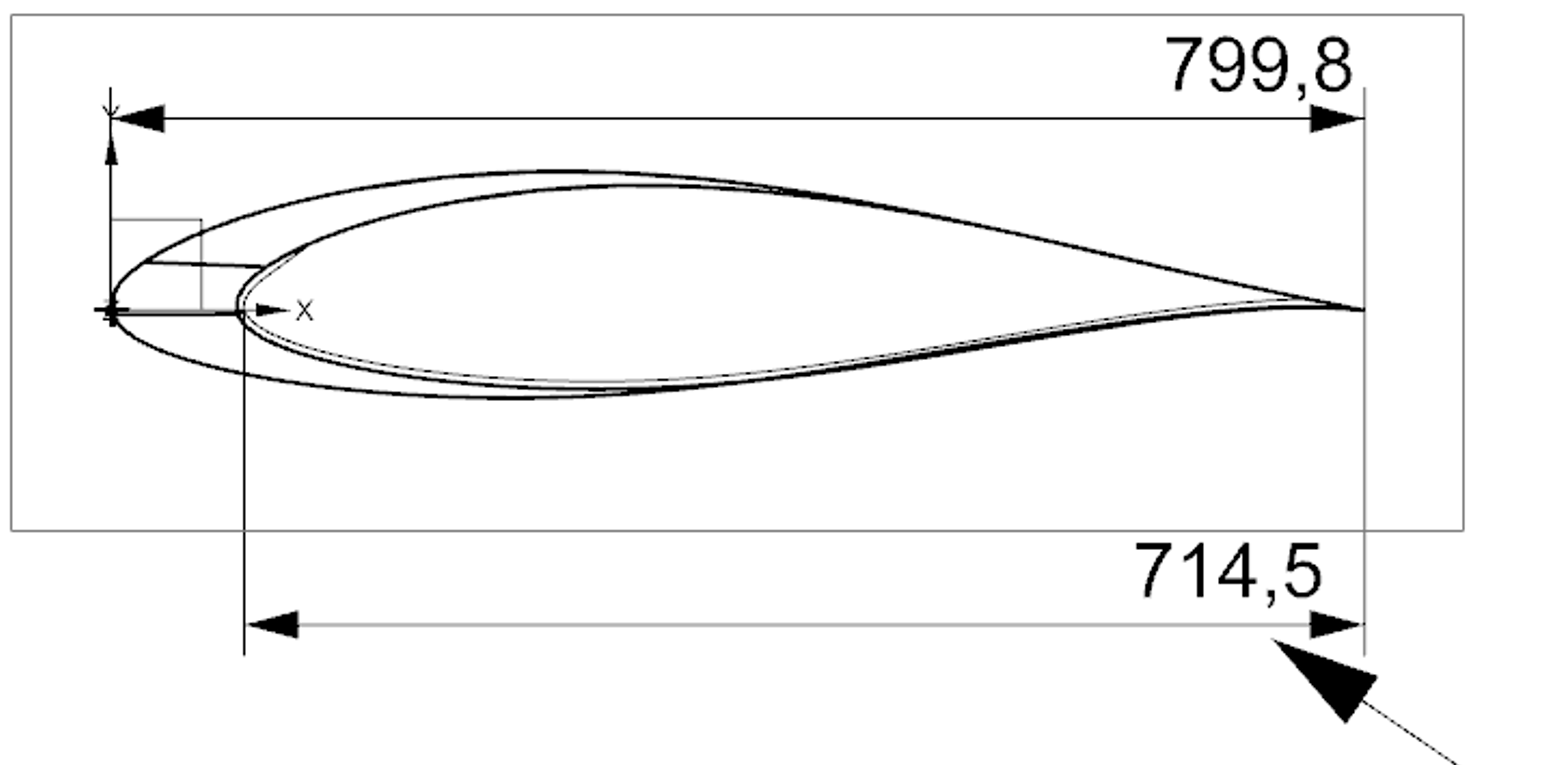
The horizontal and vertical stabilizer areas were sized using standard tail volume coefficient ratios, based on the DG-800 reference dimensions.
Landing Gear
Due to time limitations, the landing gear design ended up being simplified, requiring more work in the future.
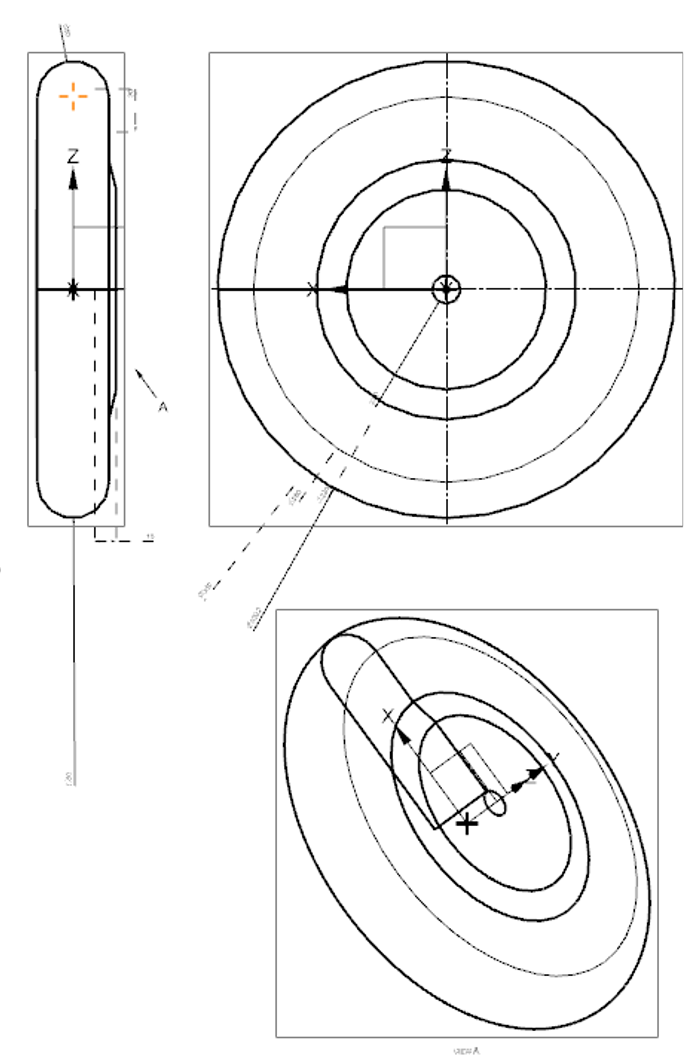
A basic detachable structure, with a rod intersecting it, was created as a holder for the wheels.
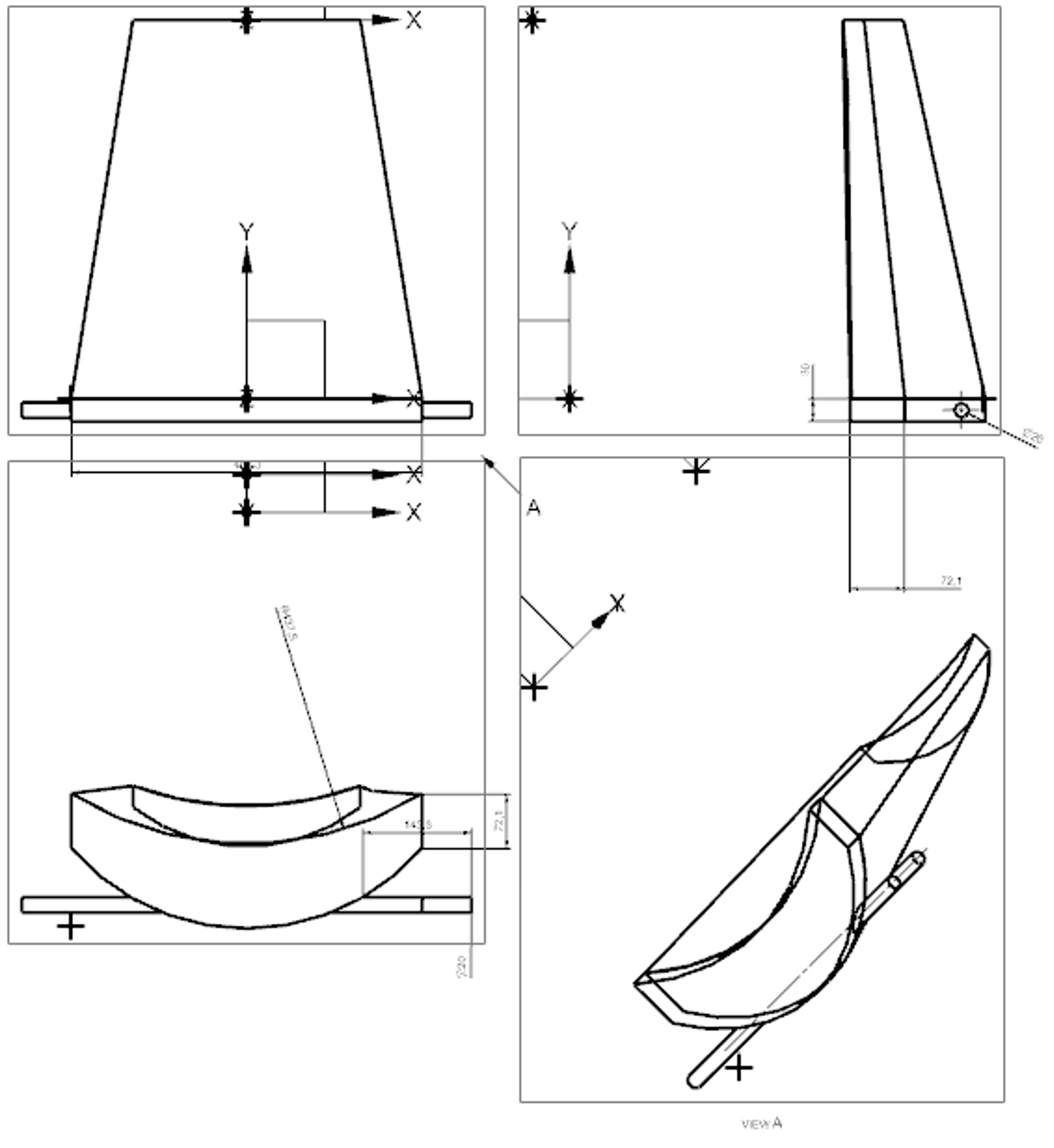
For the wheels themselves, dimensions were sized using a standard empirical wheel-sizing relation based on the estimated wheel load.
Final Assembly
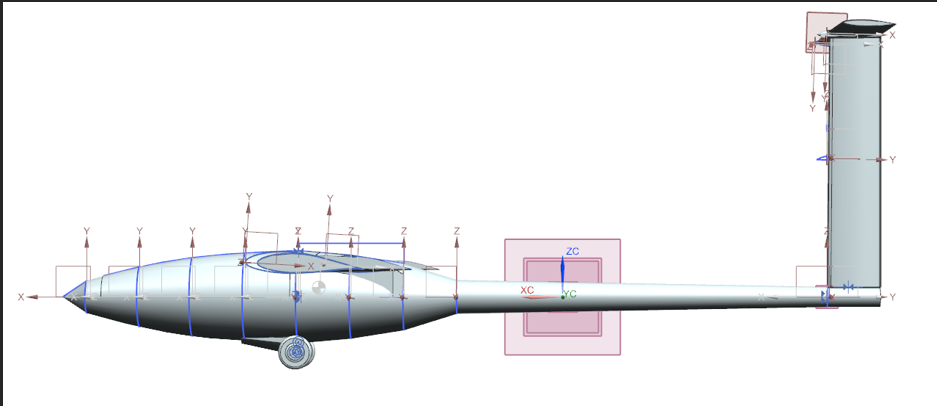
After all the parts were designed (I designed the glider body, and the rest was designed by other team members), they were brought together for assembly.
As a final step, materials were selected. In the end, we decided on the use of Aluminium 2014 for the whole body, due to its relative strength, ease of manufacturing, and low cost.
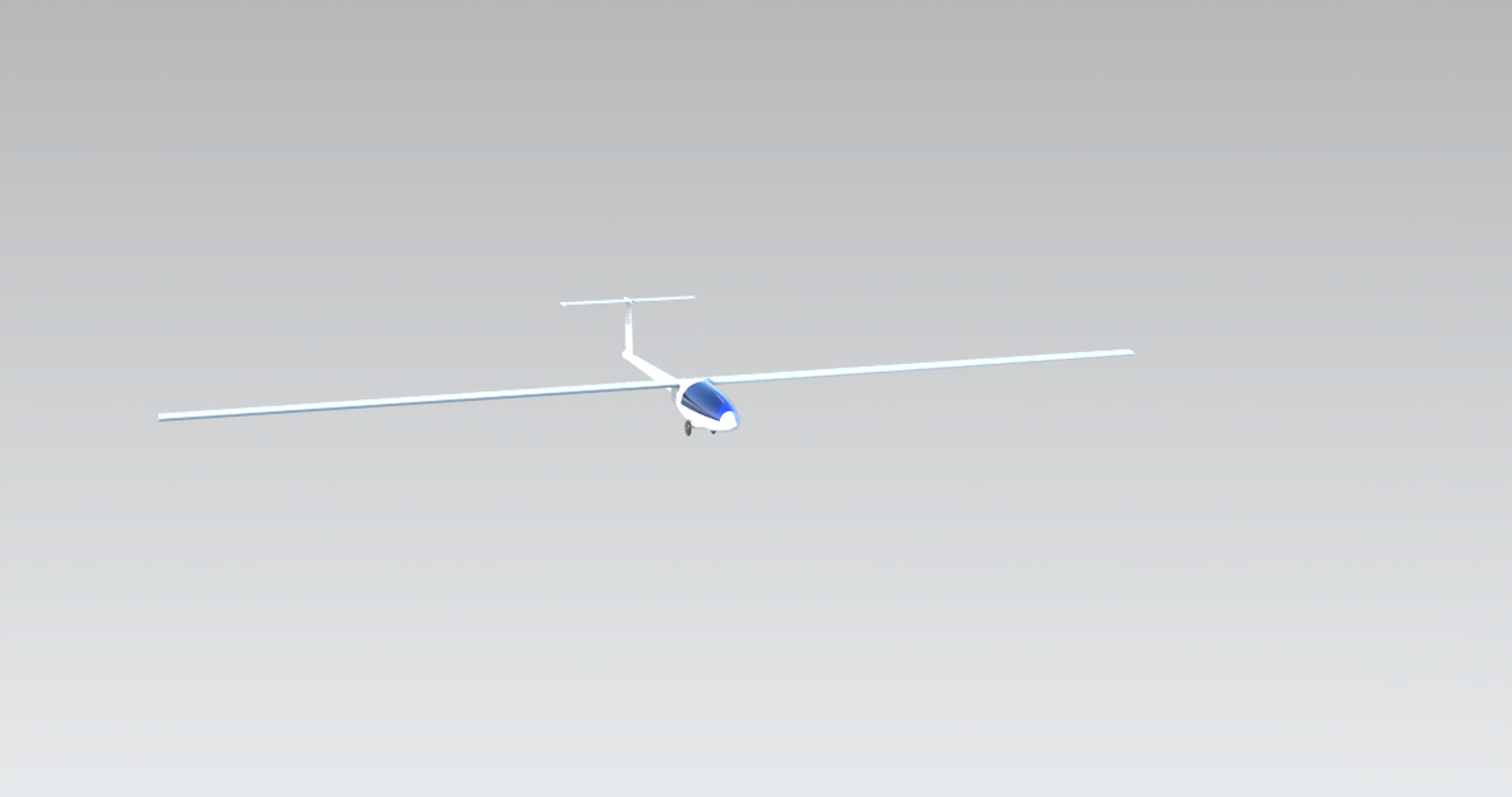
This project was made as the final project for AEE1203 at Florida Institute of Technology.